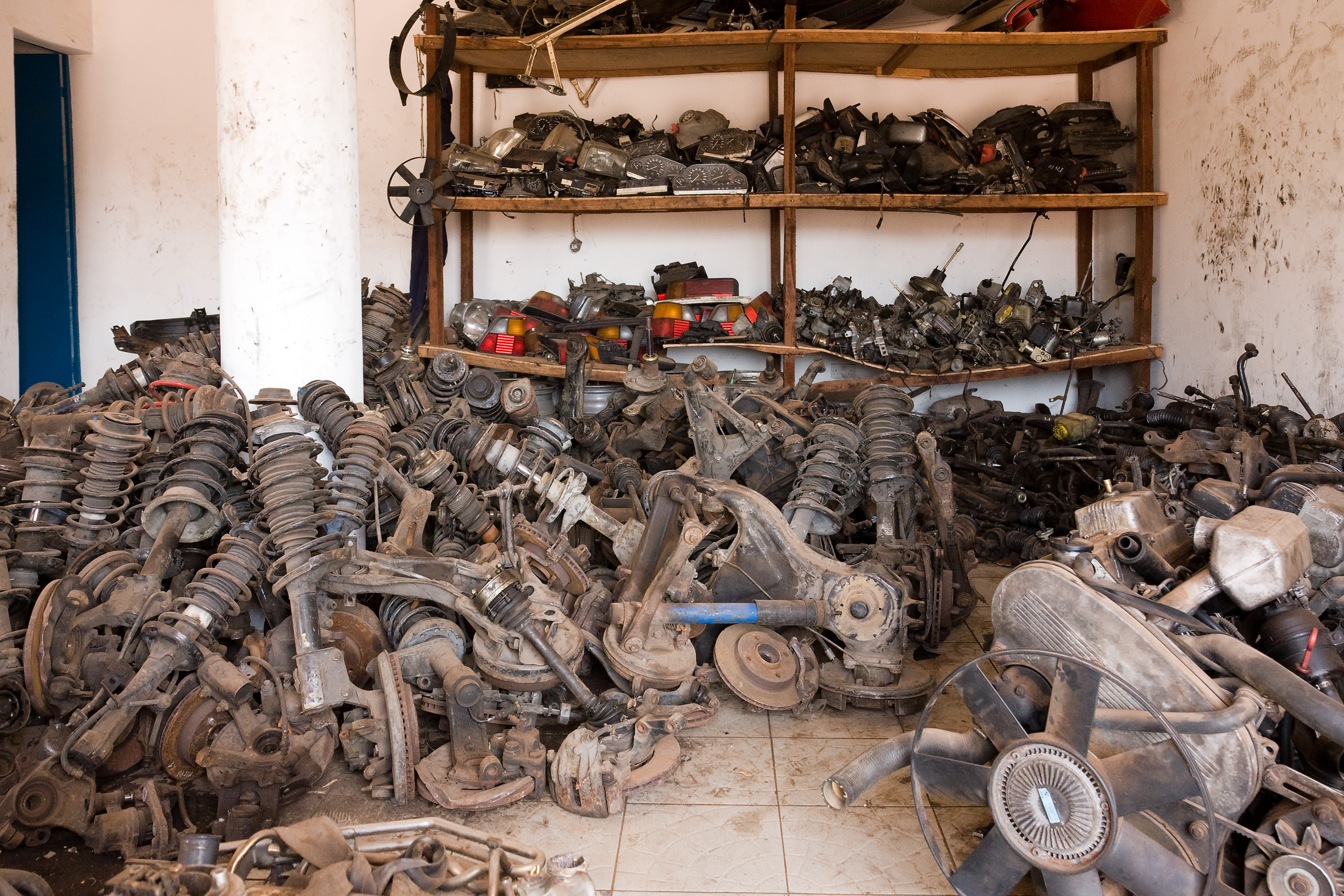
The Polish Spare Parts Market at a Glance
Poland is one of Central Europe's largest markets for automotive spare parts, driven by a passenger vehicle fleet of approximately 25 million units — one of the highest per-capita ratios in the EU. The average age of a vehicle on Polish roads is around 14 years, which sustains consistent demand for replacement parts across a wide range of makes and model years.
The market is served by three primary distribution layers: manufacturer-authorised ASO dealerships, large independent wholesale distributors (such as Inter Cars, ELIT, and AutoPartner), and a fragmented retail segment encompassing local shops, online marketplaces, and cross-border import channels. Each layer presents a different trade-off between price, availability, and quality assurance.
Understanding OEM, OES, and Aftermarket Tiers
The terms "original" and "OEM" are used loosely in the Polish retail market and often confuse buyers. The actual supply hierarchy is as follows:
OEM (Original Equipment Manufacturer)
Parts produced by the same supplier that manufactures components installed on the vehicle during assembly, sold through the vehicle manufacturer's parts network under the manufacturer's own part number and packaging. These parts carry the highest price premium — typically 40–120% above equivalent aftermarket alternatives — and are stocked primarily at ASO dealerships.
OEM parts are generally required for warranty-sensitive repairs during the vehicle's guarantee period. Under BER 461/2010, independent workshops may use OES-quality parts for warranty work without voiding the manufacturer guarantee, provided the parts quality can be demonstrated to be equivalent.
OES (Original Equipment Supplier)
Identical in specification to OEM parts — produced by the same tier-1 supplier — but packaged and sold under the supplier's own brand name rather than the vehicle manufacturer's logo. Bosch, ZF, Valeo, Hella, Brembo, and Sachs are among the most widely recognised OES brands in Poland. These components are typically 20–50% less expensive than OEM-labelled equivalents while meeting identical technical specifications.
For the majority of repairs, OES parts represent the most cost-effective choice without compromising technical quality. Their availability at large Polish distributors is extensive, covering vehicles from 1990 onwards for most European and Japanese makes.
IAM (Independent Aftermarket)
Parts manufactured by suppliers outside the original vehicle production chain. This tier spans a broad quality range — from ISO-certified producers adhering to equivalent technical standards, to unbranded Chinese imports with no traceable quality documentation. Price points in this tier vary widely: a set of front brake pads might range from 35 PLN to 280 PLN depending on brand and origin, compared to OES Brembo pads at approximately 220 PLN.
Poland's Main Inspectorate of Trade (Inspekcja Handlowa) conducts periodic market sweeps of automotive parts. A 2023 sweep covering 140 part samples found that 31 samples — primarily unbranded brake components and wheel bearings — failed to meet the dimensional or material specifications claimed on packaging.
Major Distributors in Poland
Three wholesale distributors dominate the Polish independent aftermarket:
Inter Cars S.A.
Poland's largest automotive parts distributor and the largest independent parts distributor in Central and Eastern Europe. Inter Cars operates over 200 distribution points across Poland and stocks parts for more than 130 vehicle makes. Their catalogue covers both passenger and commercial vehicles, and the company maintains a professional workshop loyalty programme (IQ). intercars.com.pl
ELIT Polska
Part of the Pan-European ELIT Group, covering over 50 countries. ELIT operates regional distribution centres in Łódź, Wrocław, and Gdańsk and focuses on rapid delivery cycles — typically same-day or next-morning for in-catalogue parts. Their strength lies in European and Asian parts coverage for vehicles from the late 1990s through current models.
AutoPartner S.A.
A Warsaw Stock Exchange-listed distributor supplying approximately 4,000 workshops across Poland. AutoPartner maintains a catalogue of over 2 million references and is particularly well-positioned in brake components, filters, and engine management parts. Their online ordering portal offers real-time stock visibility.
Online Parts Marketplaces and Cross-Border Imports
Allegro remains the dominant platform for consumer-facing parts retail in Poland, hosting listings from both domestic distributors and individual sellers. CE-marked parts from EU-based sellers generally meet the required standards, but listings from non-EU sellers on platforms such as AliExpress or eBay require careful evaluation.
For cross-border sourcing from Germany — where a mature used parts sector (Gebrauchtteile) exists — platforms such as kfzteile24.de and autoteile-markt.de are established and ship to Poland. Delivery times are typically 3–5 business days and VAT reclaim procedures apply when ordering for business use.
Identifying Counterfeit Parts
Counterfeit automotive parts — particularly brake pads, wheel bearings, and lighting components — are a documented problem in the Polish market. The following indicators can help identify suspect products:
- No CE marking on EU-regulated categories (brake pads, steering components, lighting)
- Packaging with spelling errors, missing Polish-language safety information, or absent manufacturer address
- Part numbers that do not match the brand's published catalogue cross-reference database
- Weight significantly below the equivalent genuine component (common in cast iron brake discs)
- Suspiciously low prices — more than 70% below the market average for the same reference
The European Tyres and Rubber Manufacturers' Association (ETRMA) maintains a counterfeit product registry and accepts reports from consumers at etrma.org. For Polish-language reporting, the Office of Competition and Consumer Protection (UOKiK) maintains an online complaint form at uokik.gov.pl.
Spare Parts Availability for Older Vehicles
Vehicles from the late 1990s and early 2000s — particularly Fiat Seicento, Opel Astra G, Volkswagen Passat B5, and Ford Focus Mk1 — remain common on Polish roads and in many cases have better parts availability through aftermarket channels than through manufacturer networks, where model support may have lapsed. Independent distributors such as Inter Cars maintain listings for parts up to 25 years old for many European models.
For vehicles older than 25 years classified as zabytki (vintage/historic vehicles), the specialist market for NOS (new old stock) and used original parts operates primarily through enthusiast clubs affiliated with the Polish Federation of Historic Vehicles (Polska Federacja Pojazdów Zabytkowych) and through specialist dealers in Poznań and Wrocław.
Correct Part Selection: Using VIN-Based Lookup
Selecting the correct replacement part requires more than make and model matching. Vehicles of the same model year may carry different engine variants, gearbox types, and option packages that affect part specifications. VIN (Vehicle Identification Number) lookup tools — available through distributor portals such as Inter Cars' TecDoc integration — allow selection based on the full 17-character VIN encoded on the windscreen and chassis plate, ensuring the part reference matches the specific vehicle configuration.